

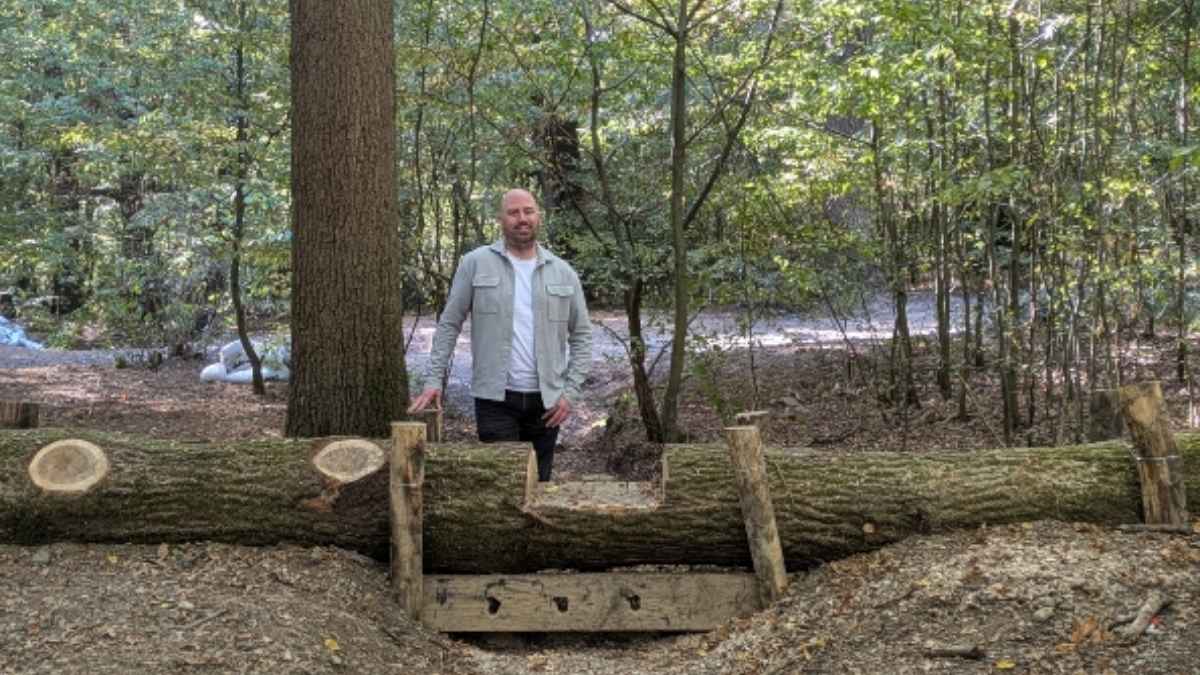
The council has begun three flood‑risk reduction schemes across Ruislip, aiming to bolster resilience to extreme weather while safeguarding local green spaces.
Work at Park Wood, a Site of Special Scientific Interest, involves installing five leaky dams, a new pond and additional woodland interventions to slow runoff into the River Pinn. The temporary water retention will protect downstream properties on Park Avenue and Broadwood Avenue. Funding comes from the Thames Regional Flood and Coastal Committee Natural Flood Management Fund and the HS2 Community and Environment Fund, with completion expected later this month.
At Pinn Meadows, the second scheme restores and naturalises sections of Elma’s Ditch and expands a groundwater pond to increase its capacity after heavy rain. Pipe alterations feeding the ditch will also aid water management. Together with the Park Wood works, this initiative forms an area‑wide approach to reducing flood risk along the River Pinn corridor. Defra’s Natural Flood Management Fund finances the project, slated for completion in December.
The final scheme, slated to start in October at Bessingby Park, will deepen and widen existing attenuation pools, allowing rainwater to accumulate and drain slowly. Excavated soil will be reshaped into a protective mound along the park’s southern boundary. The council’s Carbon Offset Fund backs this work, which should be finished by November.
Cllr Adam Bennett, Hillingdon Council’s Cabinet Member for Community, Environment and Enforcement, said: “The new projects are a vital part of our ongoing work to help future‑proof the borough against the changing climate and protect local residents and businesses from some of the impacts of extreme weather.
“While events like severe floods are relatively infrequent, it is essential that we continue to invest in measures that strengthen our defences and enable us to be better prepared and help protect our communities should something happen.
“As well as reducing the risk of flooding, these projects will create and enhance habitats for wildlife, boosting biodiversity and bringing additional benefits to our green spaces.”